This week I worked on some projects for the class as well as continuing work on my personal Gameboy project, which hopefully, will find a way to intersect with my composition classwork.
Few major developments have been made with my Gameboy, besides the fact that I got a second working GBA. All it really took was for me to open it up and clean it up a little bit. However, it is fussy. The batteries have to be in just right. I’d like to replace this with some kind of DC input by just splitting open a DC power chord and connecting metal to the positive/negative battery springs on the device. Also, the start and select buttons don’t work at all, which could be critical for certain ROMS. However, it does have a built-in auxiliary port which actually has great stereo output. Another really useful thing I got to work was the auxiliary chord for the GBA SP. The SP doesn’t have a built-in aux out, so it needs a little cable to send audio out of the device. I had one but it didn’t work. Thanks to some help at Luther’s Maker Space I was able to solder on a new female-auxiliary port. Now I have two GBA’s with fully-functional stereo output, and they sound great. I just need a device that control them without using a DAW or a laptop. That’s why my next advancement will be to set up a Raspberry Pi mini-computer to control the Gameboys.
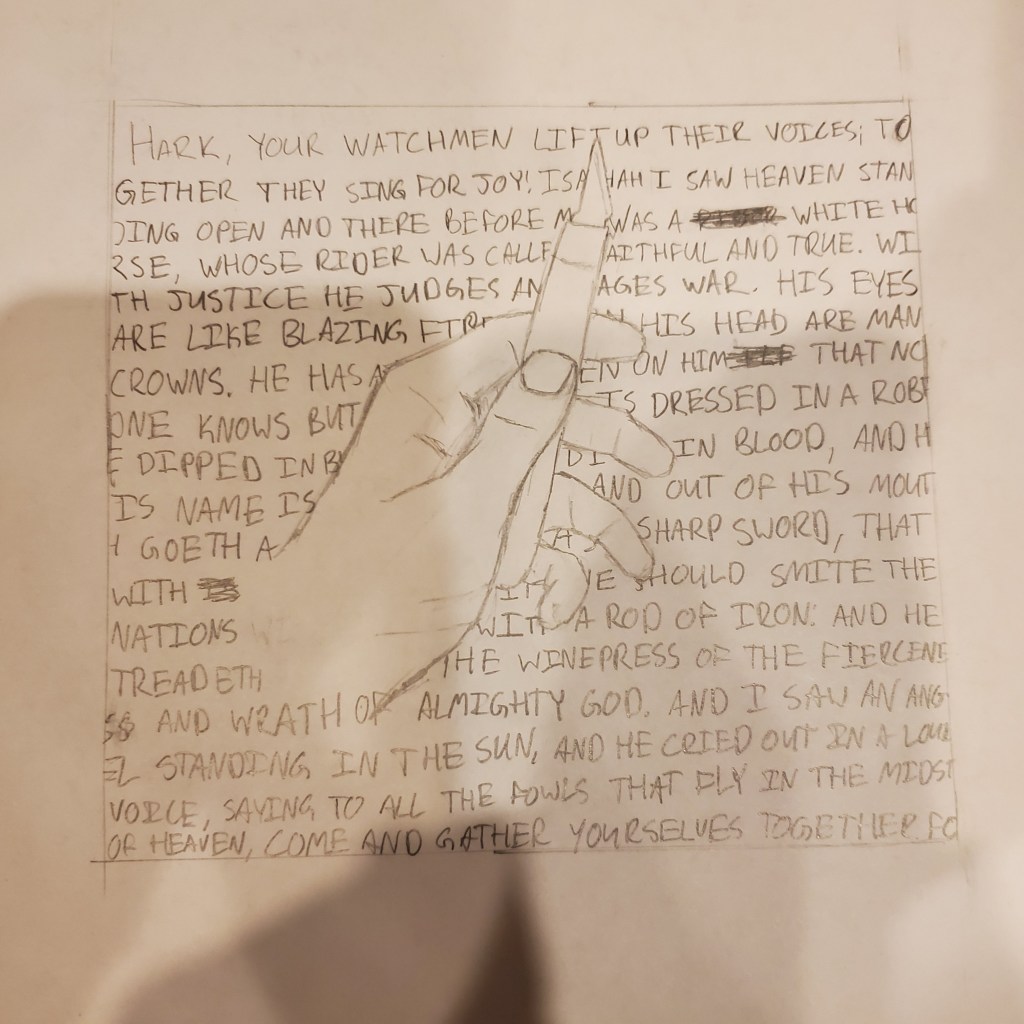
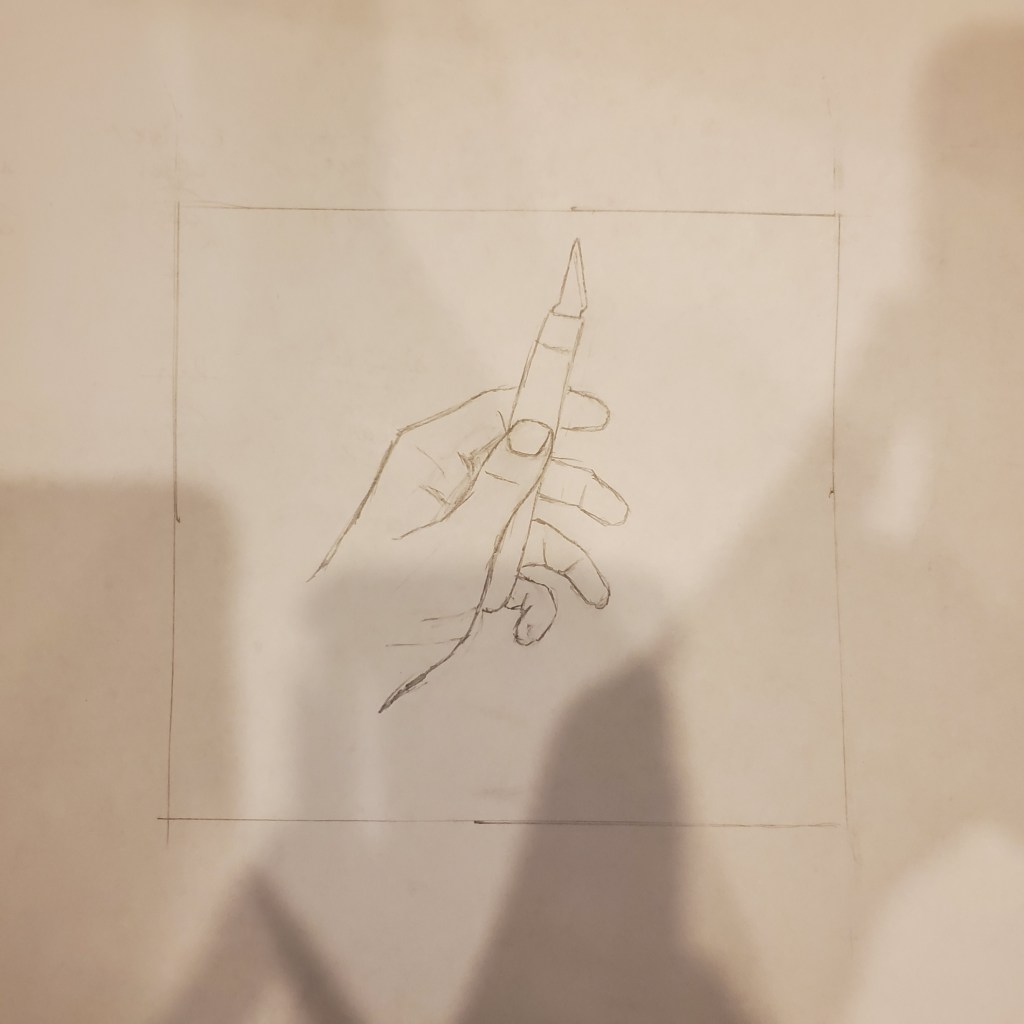
The “composition” assignment this week was to create a visual sketch of what will be our midterm piece. I’m really bad at creating literal connections to narratives or directions in my music, so like most things, I tried approaching it on a more abstract level by focusing on aesthetics. In my score I thought I’d like to have some kind of clear, conceivable MIDI-based lines that slowly becomes drowned and drenched in abrasive noise. I was thinking about the contexts of sounds, and how a clear melody can actually be more recognizable to a listener than a recording of a “real-world” noise, and part of my composition may want to toy with this distinction. I thought the best way to represent this in the visual was by having some image that is physical, clear, and tangible: in this case, the hand holding the scalpel. I best reason I can give for choosing this image was because I have an attraction to sharp, pointy things both physically and sonically. The more accurate answer, however, is probably that I just liked the aesthetic it had. The words that are flooding around the sketch are not really meant to be read, but they are mostly taken from Revelations chapter 19. This, to me, was a good representation of the “noise” that engulfs the object of focus. Furthermore, I am playing with the idea of possibly including some spoken word into my composition, and if I do, it would probably be of some literature with powerful language, such as the text used.
Due to some issues with the audio recorder we use in the studio, I have not yet recorded the sounds that had in mind. I hope to get to them as soon as possible. I want to get some more raw, abrasive sounds. I will take the recorder to the scene shop at Luther and see if I can get some sounds of power tools or something industrial like that. I may also exercise some scream vocals in the whisper room. Stay tuned!
 ben_making_sounds
It’s been awesome to see the gameboy process unfold. I’m interested to see what you’ll do with it. I also like the idea of a gradual drowning out of a MIDI lines for your piece. It gives a cool effect.
LikeLike
I really like your concept of playing with how a melody is more recognizable to humans than “real-world sounds.” I think if you could find a way to make the “real-world” sounds imitate/reiterate the melody (or vice versa), you could REALLY confuse your listeners!
LikeLike
Thanks for the updates, Ben! It’s great to hear how things are developing.
LikeLike